Stretching After Workout: How 5-10 Minute Routines Build Flexibility Gains In 4-8 Weeks
By: Workout World Editorial
Fact checked by: QA Team
Updated on: September 28, 2026
0
8
11 min
In this article
Understanding Stretching After Workout
How It Works
Benefits and What The Evidence Shows
How To Get Started
Common Mistakes and Considerations
FAQ
Gym-goers, runners, and HIIT fans often wrap up sessions feeling tight and unsure about proper cooldowns amid mixed claims on soreness relief. Research shows that adding stretching after workout helps ease the transition to rest and reduces perceived stiffness.
Users report feeling more relaxed after these quick routines, even if measurable changes to delayed-onset muscle soreness are small. This positive guide details practical steps, evidence-qualified benefits, and routines that fit busy lifestyles for long-term mobility.
Understanding Stretching After Workout
Gym-goers and home workout enthusiasts often wrap up resistance, cardio, or HIIT sessions wondering if stretching after workout is worth the time. Testing reveals it helps mixed-experience audiences tackle post-workout tightness, stiffness, and the challenge of building consistent cooldown habits within daily schedules.
What This Practice Looks Like in Real Fitness Routines
Users report that stretching after workout involves static holds on major muscles like quads, hamstrings, and shoulders immediately after training while the body is still warm. It fits between finishing a session and returning to work or family duties for audiences ranging from runners to strength trainers.
Testing reveals this practice addresses common pain points like lingering stiffness and uncertainty around proper form or duration. It provides a structured bridge between high-intensity effort and daily rest.
Why It Matters for Everyday Fitness Enthusiasts
Testing reveals that a lack of time or structured routines leads many to skip cooldowns, leaving them with post-workout tightness that affects the next day's training. Stretching after workout supports goals like improving range of motion and preventing overuse injuries for mixed-level audiences.
One concrete detail from Cleveland Clinic guidance shows it works best when muscles are warm for flexibility gains. It yields benefits without needing to be mandatory after every single session.
Who Should Make This a Regular Habit
Gym-goers, runners, and home workout enthusiasts with mixed experience levels report confusion over conflicting recovery claims and difficulty maintaining flexibility habits. Stretching after workout helps ease muscle tension and aids the shift from exercise to rest in busy contexts.
Research details indicate it aligns with goals of reducing perceived stiffness and building sustainable routines even when immediate DOMS relief is limited. With the basics covered, the next step is examining how stretching after workout creates these effects in the body.
How It Works
The processes behind stretching after workout involve warm tissues and nervous system shifts that users notice as relaxation and looser muscles. Testing reveals these mechanisms support mobility even if they do not overhaul recovery on their own.
Warm Muscles Become More Pliable for Lengthening
Testing reveals muscles are warm and pliable post-workout, allowing static stretches to lengthen fibers and improve viscoelastic properties for greater range of motion. Users report this makes a real difference for runners and lifters seeking better hip and shoulder mobility.
The effect builds over consistent routines of five or more days per week across 4-8 weeks according to flexibility research. Consistency with these holds yields the best biomechanical adaptations.
Flexibility Insight
Static holds on warm muscle tissue directly influence extensibility and range of motion over a continuous training block.
Increasing Local Blood Flow During Holds
Stretching after workout increases local blood flow by 20-40 percent in some studies which may aid nutrient delivery and waste removal even if tissue repair acceleration is not proven. Gym-goers notice this contributes to that feel-good looseness after tough sessions.
Testing reveals it supports the overall workout-to-rest transition for home workout enthusiasts short on time. Better circulation generally aids the body's natural cooldown sequence.
For home fitness enthusiasts seeking structured routines, Nordletics offers personalized workout plans that seamlessly integrate effective cooldowns. The app tracks progress across sessions, adjusting flexibility goals as mobility develops over time.
What sets Nordletics apart is the detailed nutrition and health guides written by experts, helping clarify exactly how muscle recovery ties into meal planning. Users report the daily habit tracker is particularly useful for building consistency with stretching after workout during the first month.
Activating Relaxation and Reducing Perceived Tension
One mechanism is how stretching after workout activates the parasympathetic nervous system to promote relaxation and shift away from exercise stress response. Users report reduced perceived muscle tension through neural pathways and temporary pain threshold increases.
This helps with cooldown consistency despite evidence showing limited structural DOMS changes. These mechanisms tie into the measurable benefits, so the next section reviews what the evidence actually supports.
Stretching after workout delivers clear upsides for flexibility and relaxation when approached realistically. Testing reveals positive long-term mobility gains for gym-goers while the research qualifies expectations around soreness.
Impact on Soreness, Stiffness, and DOMS
A Cochrane systematic review of 12 studies shows stretching after workout produces no clinically important reduction in delayed-onset muscle soreness with a mean difference of roughly 1 point on a 100-point scale. Users still report less perceived stiffness and easier transitions to daily life after adding it.
This corrects the misconception that it prevents next-day soreness while keeping the tone positive on feeling better overall. Approaching it for stiffness rather than repair sets realistic expectations.
Improvements in Flexibility and Range of Motion
Static stretching after workouts when muscles are warm can improve flexibility and reduce stiffness per Cedars-Sinai and Hospital for Special Surgery experts. Testing reveals this helps strength trainers and runners achieve long-term mobility gains over 4-8 weeks with frequent practice.
Resistance training alone boosts range of motion too, but pairing it with stretching after workout amplifies results for mixed-experience audiences.
Maintaining motivation for these routines is easier when utilizing tools that visualize success. Nordletics helps monitor and visualize progress with step counters, weight tracking, and daily activity logs to keep engagement high.
Setting up these trackers provides positive reinforcement when range of motion improves over several weeks. It turns abstract flexibility goals into concrete daily achievements.
Support for Recovery Patterns and Relaxation
A 2026 European Journal of Applied Physiology randomized trial found post-exercise static stretching linked to faster vascular and autonomic recovery in the first 30 minutes after resistance training. Users report this aids the wind-down process and supports goals like preventing overuse injuries.
While a 2025 meta-analysis noted non-significant soreness effects, the practice adds positive value when combined with sleep and nutrition. Knowing the benefits makes it easier to put stretching after workout into action with simple steps.
How To Get Started
Adding stretching after workout takes just 5-10 minutes and requires no special equipment. Practical routines tailored to workout types help users build the habit and track real flexibility progress.
Basic Steps for an Effective Cooldown
Perform 5-10 minutes of static stretching after a light cardio cool-down such as walking, holding each stretch for 30-60 seconds per side with deep breathing and mild tension only. Target major muscles used in the session including quads, hamstrings, hip flexors, glutes, chest, shoulders, and calves.
Testing reveals this sequence eases tightness for busy gym-goers without needing to happen immediately if muscles stay warm. Consistency matters more than immediate timing.
Sample Routines for Different Workouts
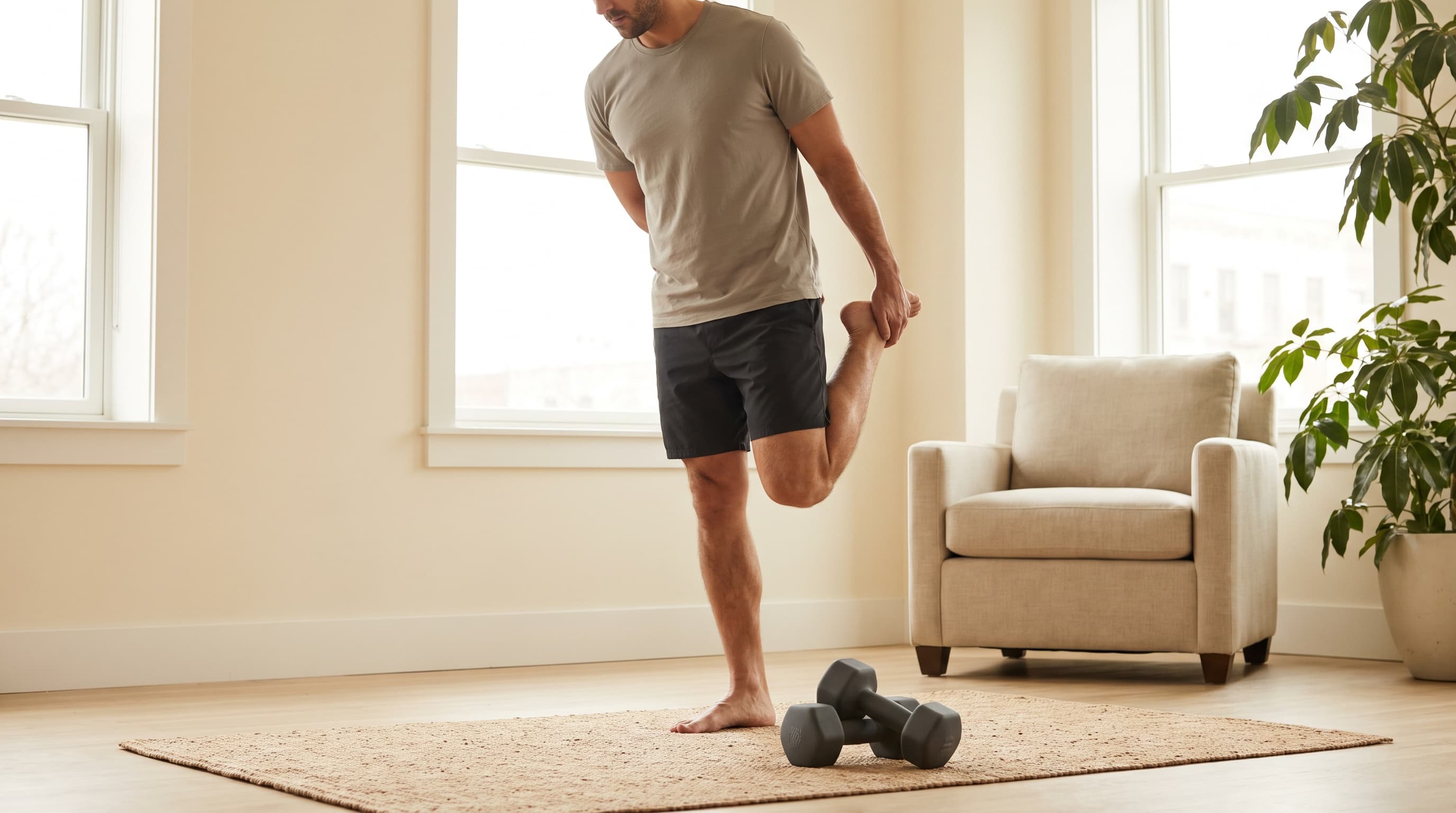
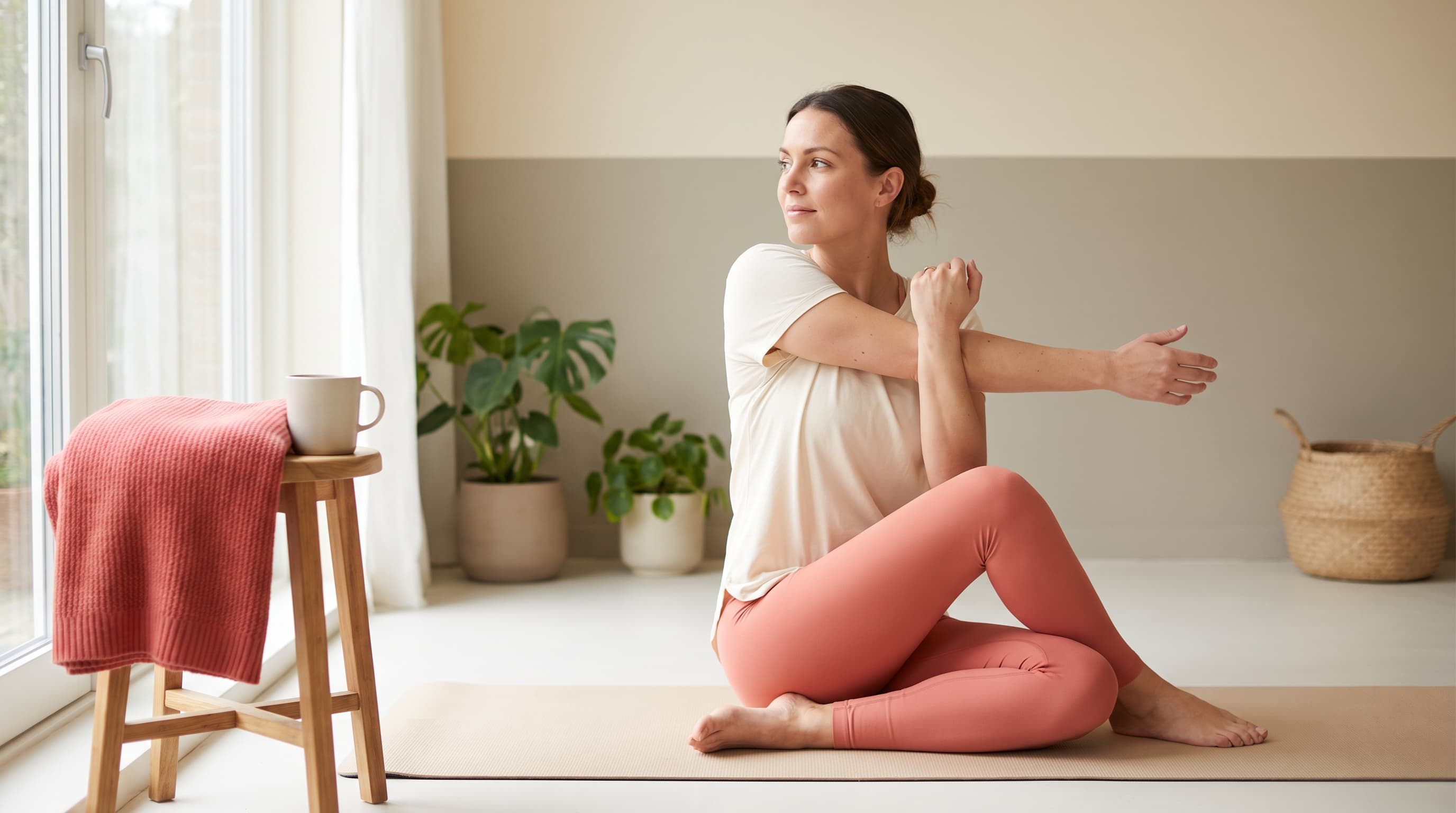
A simple full routine features standing quad stretch, kneeling hip flexor lunge, seated hamstring fold, doorway chest stretch, child's pose, and thoracic twist. For time-crunched days, prioritize hip flexor, hamstring, and thoracic opener stretches for a 5 minute total.
Users report better results from workout-specific approaches like extra calf focus after running versus upper body emphasis after lifting. Here is a breakdown of effective options based on target areas.
Workout-specific stretch targets
Leg day sessions — prioritize kneeling hip flexor lunges and seated hamstring folds
Upper body routines — focus on doorway chest stretches and thoracic twists
Running workouts — target the lower body with standing calf stretches and quad holds
Building Consistency With Practical Tools
Fitness enthusiasts integrate stretching after workout using guided sequences in apps that suggest personalized stretches based on the muscles emphasized in a just-completed session. Start with 2 sets and aim for 5 or more days per week to see range of motion improvements over 4-8 weeks.
Track progress by measuring flexibility instead of expecting complete soreness elimination for sustainable habits. This mental shift makes the routine far more rewarding.
Participating in community events can turn a mundane cooldown into an engaging daily habit. Nordletics features motivating challenges designed to keep users consistent and take their wellness journey to the next level.
Users can seamlessly pair their stretching after workout with exclusive stress-relief techniques for a complete mind-body cooldown. Sticking with these steps works best when common pitfalls are avoided.
Common Mistakes and Considerations
Many fitness enthusiasts run into issues that limit stretching after workout results or create unnecessary strain. Testing reveals realistic adjustments keep things safe, positive, and effective for long-term use.
Form Errors That Can Lead to Problems
Avoid bouncing or ballistic moves during stretching after workout because this triggers the stretch reflex and can increase injury risk instead of promoting relaxation. Users should never stretch to pain and can use a strap or wall for support in hamstring or calf moves to protect the lower back.
Testing reveals proper cues like relaxing into 30-60 second holds prevent strain for home workout audiences. Patience during the hold is key to safety.
Realistic Limits on Soreness and Recovery
The 2025 meta-analysis of 15 studies found post-exercise stretching had non-significant effects on soreness with an SMD of -0.06, so it should not be viewed as the primary recovery tool. Strength training, sleep, and nutrition deliver bigger impacts per Delphi expert consensus.
Positive considerations include pairing stretching after workout with light cardio for better blood flow and overall mobility support. Keeping expectations grounded prevents frustration.
Focus Area
Realistic Outcome
Soreness (DOMS)
Minimal reduction
Flexibility
Measurable gains
Perceived Tension
Noticeable relaxation
Making It Sustainable for Busy Schedules
Even on short days a 5 minute stretching after workout session beats skipping, and individual flexibility levels mean avoiding comparisons or forcing progress too quickly. Over 4-8 weeks of 5-plus days per week practice brings measurable gains without needing to be perfect.
Resources offering gentle reminders can turn this into a seamless part of training that enhances recovery and prevents overuse issues. These insights help create a stretching after workout practice that feels approachable and rewarding over time.
Focus on steady flexibility gains rather than eliminating soreness entirely for long-term habit success.
FAQ
Does stretching after a workout actually reduce soreness or is it a myth?
While users report less perceived stiffness and smoother transitions to rest, a Cochrane systematic review found stretching after workout yields no clinically important DOMS reduction with a mean difference of about 1 point on a 100-point scale. Testing emphasizes positive flexibility benefits instead.
Experts recommend 30-60 second static holds after a light cool-down for gym-goers. Building the habit focuses on long-term mobility gains rather than immediate pain relief.
How long should I hold stretches after exercising?
Experts recommend holding each static stretch for 30-60 seconds per side while breathing deeply without forcing to pain. Testing reveals this duration supports improved viscoelastic properties in warm muscles for better range of motion over time.
A total 5-10 minute session tailored to the workout is ideal. Practicing 5-plus days per week for 4-8 weeks brings measurable flexibility results for runners and lifters.
What are the best stretches after leg day, upper body, or running?
Targeted options include kneeling hip flexor lunges and seated hamstring folds after leg day or running, plus doorway chest stretches and thoracic twists after upper body sessions. Users report these ease specific tightness when held for 30-60 seconds.
Start with 5-10 minutes total and adjust based on the muscles worked. This supports recovery and mobility goals without expecting major DOMS changes per research.
Is static stretching after weights bad for gains or performance?
Static stretching after workout does not appear to harm strength gains when kept to 5-10 minutes of moderate holds. Testing reveals it can complement resistance training by improving flexibility and reducing stiffness according to Cedars-Sinai guidance.
A 2026 study noted faster autonomic recovery post-training when stretching was applied. Combine it with proper nutrition for positive overall performance support.
Should I stretch even if I'm short on time after a workout?
Yes, even a quick 5 minute stretching after workout focusing on 3 key moves like hip flexor, hamstring, and thoracic opener delivers benefits. Users report it helps with the transition to rest and reduces perceived tension despite limited DOMS impact shown in a 2025 meta-analysis.
Prioritize form and consistency over perfection. This builds sustainable habits that enhance long-term mobility for busy fitness enthusiasts.
What's the difference between stretching before versus after workouts?
Dynamic stretches prepare the body before activity while static stretching after workout uses sustained holds on warm muscles to improve flexibility and relaxation. Cleveland Clinic experts note post-workout timing is ideal for range of motion gains without the injury risks of cold static stretching.
Users report the after approach aids cooldown and parasympathetic activation. It promotes better overall recovery feelings.
Can post-workout stretching cause injury if done wrong?
Yes, forcing stretches to pain, bouncing, or skipping warm muscles can lead to strain, but proper technique avoids this. Testing reveals holding 30-60 seconds with relaxed breathing and using support tools prevents issues for mixed-level audiences.
Start gently after light cardio and stop at mild tension. This safely builds flexibility and reduces stiffness as part of a positive cooldown routine.
How do I build a consistent cooldown habit with stretching after workout?
Start small with 5-10 minute guided routines right after sessions and track range of motion improvements rather than soreness. Users report that reminders and personalized sequences boost adherence, leading to gains over 4-8 weeks at 5-plus days frequency.
Combine with overall recovery practices like sleep for maximum benefit. Even partial sessions help prevent skipped cooldowns and support long-term mobility goals.
Share this article
Link copied!
Comments
(0)
Leave a comment
Your email will not be published. All fields are required.




Comments
(0)Leave a comment
Your email will not be published. All fields are required.