Push Up Workouts: Your 4-Week Guide to Going from 0 to 20 Reps at Home
By: Workout World Editorial
Fact checked by: QA Team
Updated on: October 5, 2026
0
8
10 min
In this article
Understanding Push Up Workouts
How It Works
Benefits and What The Evidence Shows
How To Get Started
Common Mistakes and Considerations
FAQ
Push up workouts deliver scalable strength gains for busy adults who skip the gym. Testing reveals these routines help beginners overcome zero reps and intermediates smash plateaus with smart progressions.
Users report noticeable muscle development in the chest, shoulders, and triceps after sticking to structured plans. Consistent execution of these bodyweight movements transforms upper body endurance over a simple four-week timeline.
Understanding Push Up Workouts
Testing reveals push up workouts are practical, equipment-free routines that fit into 10-30 minute home sessions two to four times per week. Users report they suit everyone from beginners unable to do one proper rep to fitness enthusiasts chasing functional gains.
Who Push Up Workouts Help Most
The audience spans beginners struggling with their first proper push-up, intermediates hunting more reps, and busy adults relying on home workouts. Testing reveals these users often battle pain points like sagging hips or wrist issues.
Despite different starting points, they share goals of hitting 20 consecutive push-ups and building upper body muscle. These quick sessions reduce injury risk while accommodating mixed experience levels.
The Appeal of No-Equipment Training
Searchers seek structured programs for measurable progress without gear, often utilizing them as daily challenges or warm-ups. Users report that push up workouts boost overall functional fitness for those recovering from gym avoidance.
The context involves two to four non-consecutive sessions per week to allow for proper recovery. Testing reveals this frequency beats boredom by integrating fresh variations into the weekly schedule.
What Real Progress Looks Like
Testing reveals users master strict form first, then perform 20 or more reps while building core strength. The goal remains completing structured challenges for measurable progress, like initial max tests every four weeks.
Overcoming the inability to complete full range of motion requires fixing form issues for long-term consistency. Users report steady improvements when they prioritize depth over total rep counts.
With the audience and context covered, the mechanics driving these physical results become clear.
How It Works
Testing reveals push up workouts are compound moves that scale easily with body position changes. Here is how the muscles and mechanics drive physical adaptations.
Muscles Fired During Each Rep
This compound pushing movement relies on the pectoralis major, anterior deltoids, and triceps brachii to drive the motion. The core and serratus anterior stabilize the plank-like body position throughout the entire exercise.
Let's be real, this is not just an arm burner. Users report full range of motion from high plank to chest-nearly-touching-floor builds balanced strength across all joint angles.
The Power of the Lowering Phase
The eccentric lowering phase of two to four seconds under bodyweight load creates muscle tension. This tension causes micro-tears that drive adaptation during the recovery period.
Testing reveals a two-second lowering, as Harvard recommends, adds serious challenge to the routine. This controlled tempo leads to muscle growth without requiring any free weights.
Scaling Load for Steady Gains
Incline variations reduce the load to roughly 30-40% of bodyweight, while decline setups ramp it up for progressive overload. Standard push-ups lift about 50-75% of body weight depending on individual proportions.
Users report progressing only after mastering three sets of 10-15 clean reps at the current level prevents plateaus.
For those practicing at home, Nordletics offers personalized workout plans that adapt to this load scaling automatically. The platform tracks progress across sessions, helping adjust difficulty as upper body strength develops.
What makes it effective is the addition of customized meal plans, ensuring muscles get the exact fuel needed for recovery after intense eccentric loads. Testing reveals the daily habit tracker helps build consistency during the first month of scaling.
These mechanics translate into benefits when adherence remains high.
Benefits and What The Evidence Shows
Users report push up workouts build strength fast when programmed correctly. The research backs this up with data on muscle development and heart health.
Muscle Growth and Upper Body Strength
Push-up training with adjusted load produces 19% pectoralis major and 10% triceps muscle thickness gains. A 2017 Journal of Physiological Anthropology study showed these gains mirror low-load bench press results over eight weeks.
This corrects the misconception that bodyweight pressing only builds endurance. Testing reveals progressive programs also improve one-rep max bench press and upper body thickness in just four weeks, according to the Journal of Strength and Conditioning Research 2018.
Heart Health and Endurance Perks
Men able to do more than 40 push-ups had a 96% lower risk of cardiovascular disease events over 10 years versus those doing fewer than 10. This data comes from a 2019 JAMA Network Open study on 1,104 male firefighters.
Users report better overall endurance and functional fitness from consistent routines. Higher push-up volume correlates with modest reductions in depression and anxiety symptoms from community challenges.
Core Activation and Injury Prevention
Unstable push-up variations increase activation of core muscles like the rectus abdominis, trapezius, and lower back compared to stable versions. EMG studies published in PMC confirm these stability demands.
Testing reveals this reduces injury risk when form stays tight across sets. Busy adults integrating two to three sessions weekly report noticeable improvements in core rigidity.
This is where following structured challenges within Nordletics keeps users engaged and safe. The platform provides mindfulness and stress-relief techniques that support overall recovery alongside these core-heavy routines.
Ready to put this into action? The next steps outline exactly how to launch a routine.
How To Get Started
Starting push up workouts requires structured steps and logical progressions. Testing reveals most users see gains by following tracked plans.
Nailing Proper Form from Day One
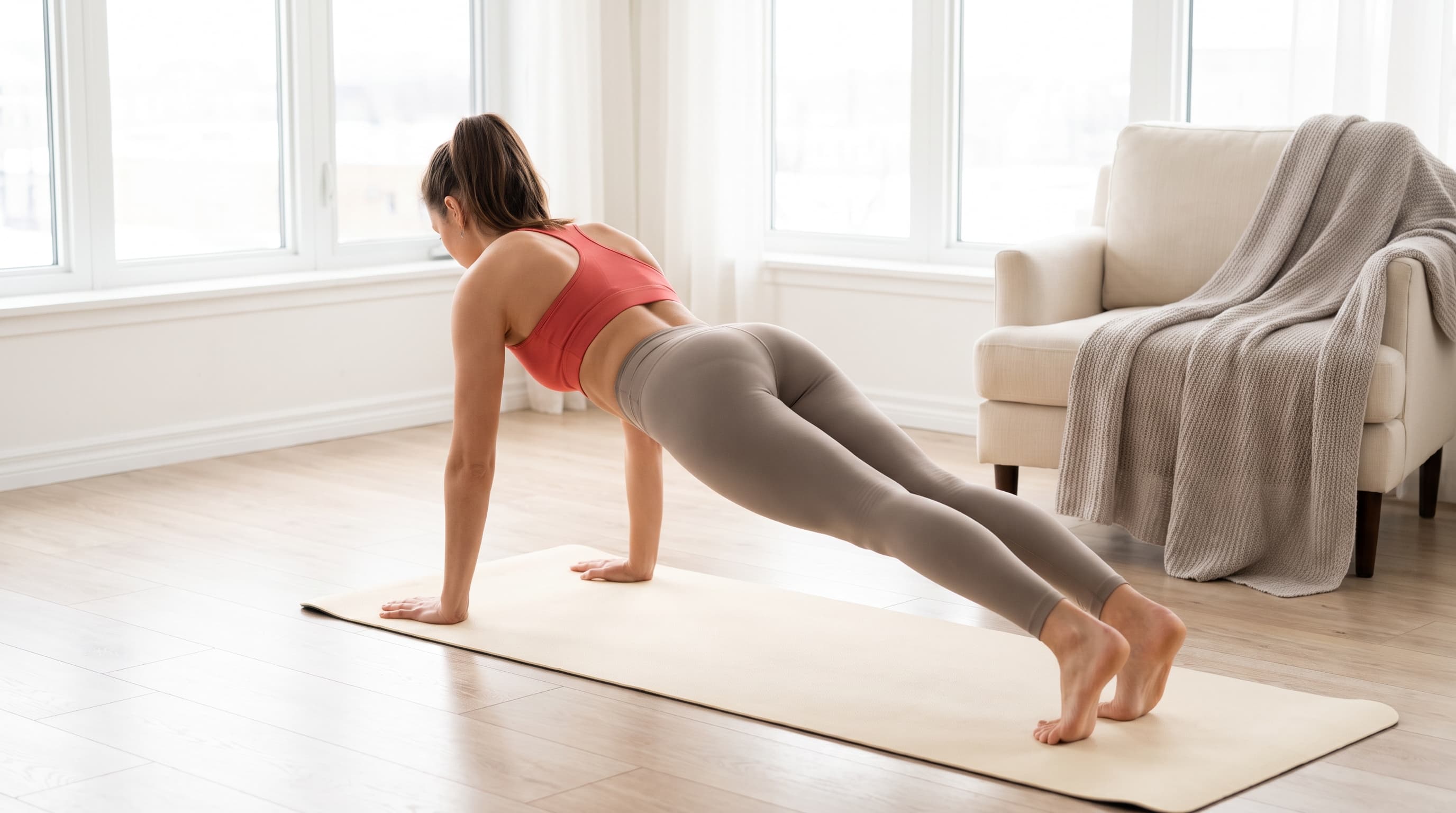
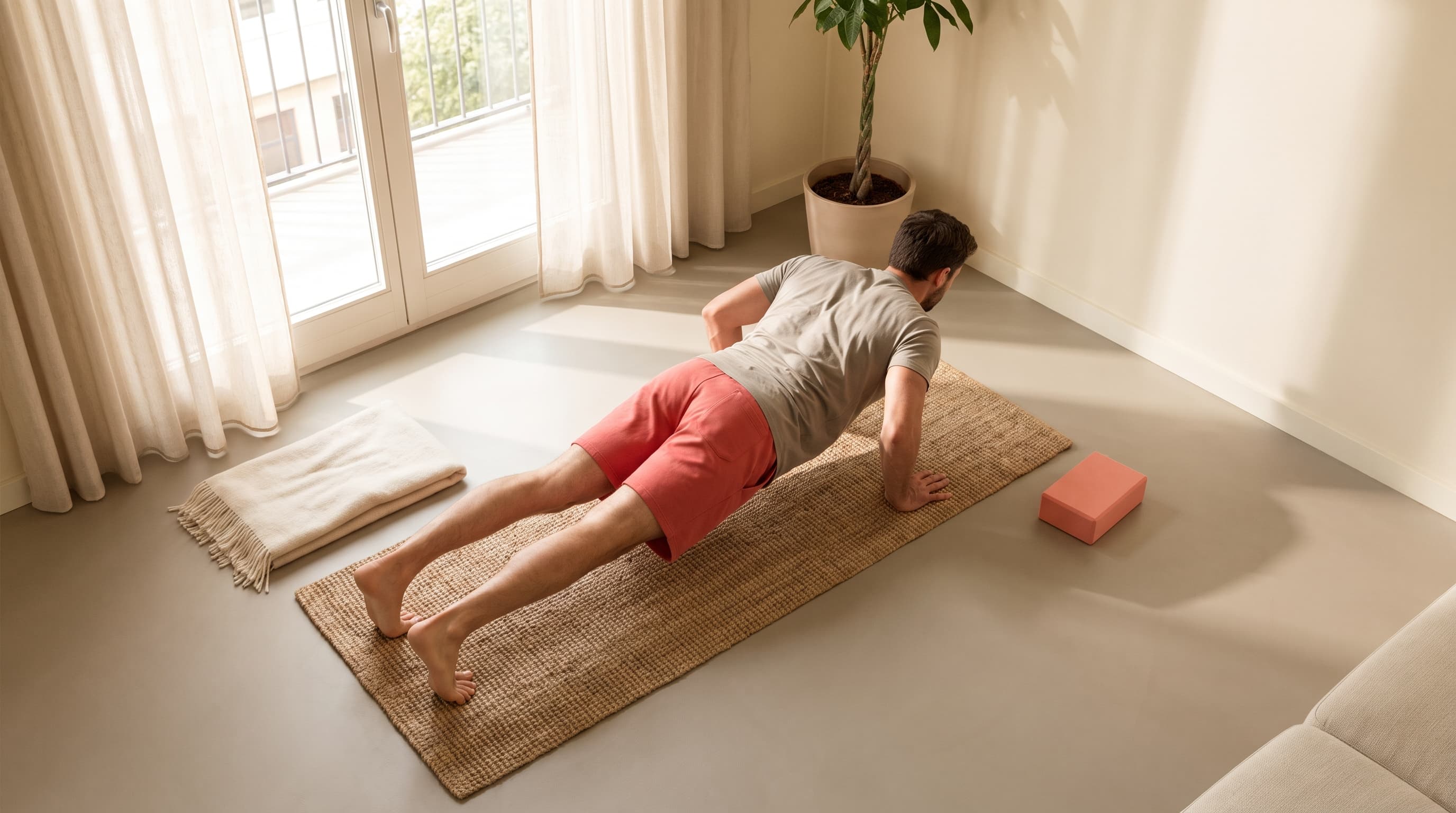
Maintain a straight line from head to heels like a plank, positioning hands wider than shoulders with elbows at 45 degrees. Use a full range of motion, inhaling on the way down and exhaling on the push.
Users report filming sessions helps fix sagging hips immediately. Start with three sets of eight to 15 reps on two to three non-consecutive days per week.
Beginner Progressions and Tools That Help
Start with regressions like wall push-ups, elevated surfaces, then knee versions before attempting full repetitions. Advance only after completing three sets of 10-15 clean reps at the current difficulty.
One practical tool for this is Nordletics, which provides simple, beginner-friendly home exercises tailored for progression. The app includes health guides written by personal trainers to help correct common form issues like elbow flare.
Testing reveals this guided approach helps beginners safely transition from zero reps to full range of motion. Visualizing progress through the app's trackers keeps motivation high during early struggles.
Building Your 4-Week Plan
Start with an initial max test, then follow a four-week progressive program with re-testing every 30 days. Train every other day to allow adequate muscle recovery.
Add reps or slow the tempo weekly, and combine these sessions with pulling movements for joint balance. Users report starting with structured progressive steps beats plateaus and keeps training fun.
Essential elements for your four-week progression
Initial testing — determine your starting maximum rep count
Volume buildup — add one to two reps per set weekly
Tempo control — practice slower descents to build strength
Even solid plans hit snags if you ignore recovery mistakes.
Common Mistakes and Considerations
Testing reveals many users struggle with the same form slips or overtraining traps. Identifying these errors keeps progress on track safely.
Form Fixes for Elbows and Hips
Avoid elbow flare at 90 degrees, which stresses the shoulder joints unnecessarily. Instead, track elbows back at a 45-degree angle to the torso.
Users report sagging hips or arching backs happen when core engagement drops. Squeeze the glutes and brace the abdominals like a rigid plank.
Use push-up handles if wrists hurt and film sessions for alignment checks.
Smart Programming to Avoid Burnout
Evidence supports two to three sessions per week rather than daily training to prevent overtraining. Testing reveals progressing only after hitting target rep counts stops early plateaus.
The 2019 JAMA study link between push-up capacity and heart health serves as motivation to track max reps every four weeks. Clear targets keep the routine focused.
Progression Phase
Target Goals
Beginner Base
3 sets 8 reps
Intermediate Build
3 sets 12 reps
Advanced Peak
3 sets 15 reps
When to Modify and Stay Safe
Knee or wall push-ups are valid regressions that build foundations, not cheating. They work well for beginners or those managing minor injuries.
Users report elevated surfaces help with wrist pain, while pregnancy requires extra modifications. Combine these pressing movements with mobility drills and check with professionals if shoulder issues pop up.
Recovery Insight
Testing reveals listening to your body and modifying depth when fatigued prevents shoulder impingement while maintaining consistency.
Adhering to these guidelines ensures steady progress over time.
FAQ
How many push-ups should I do per day or week to see results?
Testing reveals training two to three non-consecutive days per week works better than daily sessions for recovery and gains. Three sets of 8-15 reps provide a strong stimulus.
Following four-week programs from initial max tests leads to measurable rep increases. Users report steady progress without burnout when resting adequately.
Can push-ups alone build muscle and strength?
Yes, the 2017 Journal of Physiological Anthropology study showed similar 19% pectoralis major thickness gains to the bench press over eight weeks. This occurs when the load is adjusted correctly.
Users report noticeable chest and triceps muscle from progressive variations. Combining them with pulling exercises prevents imbalances for best functional strength.
What is the correct form and how do I fix elbow flare or sagging hips?
Keep a plank-straight line, place hands wider than shoulders, and tuck elbows at 45 degrees. Testing reveals squeezing the glutes and bracing the core fixes sagging hips instantly.
Filming helps spot elbow flare. Proper form with a full range of motion unlocks the 96% lower CVD risk noted in the JAMA 2019 study.
How do beginners progress if they can't do a single full push-up?
Start with wall push-ups, move to an incline, and then try knee versions. Advance only after mastering three sets of 10-15 clean reps.
Testing reveals this builds the foundation fast for busy adults at home. Utilizing feedback tools helps correct form early, keeping the goal of 20 reps realistic within four weeks.
Are knee push-ups or wall push-ups effective?
Yes, they are valid regressions that develop necessary strength and form according to multiple progression guides. They are not cheating.
Users report they effectively prepare the body for full versions while activating the chest and triceps. Research shows comparable gains when effort matches the variation.
Which variations target chest versus triceps and shoulders best?
Standard and decline setups target the chest, diamond variations hit the triceps, and archer or elevated forms focus on shoulders. Testing reveals unstable versions boost core activation based on EMG studies.
Progressing through beginner to advanced variations prevents boredom. This variety ties into the goal of hitting 20 consecutive reps with balanced development.
How can I avoid wrist pain during push-ups?
Switch to elevated surfaces, use push-up handles, or ensure proper alignment with neutral wrists. Users report warming up with mobility drills helps, especially in higher volume plans.
The 50-75% bodyweight load makes wrist care vital. Modifications allow anyone to continue building strength safely without joint stress.
How long does it take to go from 0 to 20+ push-ups?
Many users report hitting 20 reps in four weeks with structured progressive programs and re-testing every 30 days. Testing reveals consistency two to three days per week speeds up this timeline.
Fixing form accelerates progress. Reference the JAMA study on benefits past 40 reps for ongoing motivation.
Share this article
Link copied!
Comments
(0)
Leave a comment
Your email will not be published. All fields are required.




Comments
(0)Leave a comment
Your email will not be published. All fields are required.